My Save the Animals campaign
In March 1979, I had just turned fifteen.
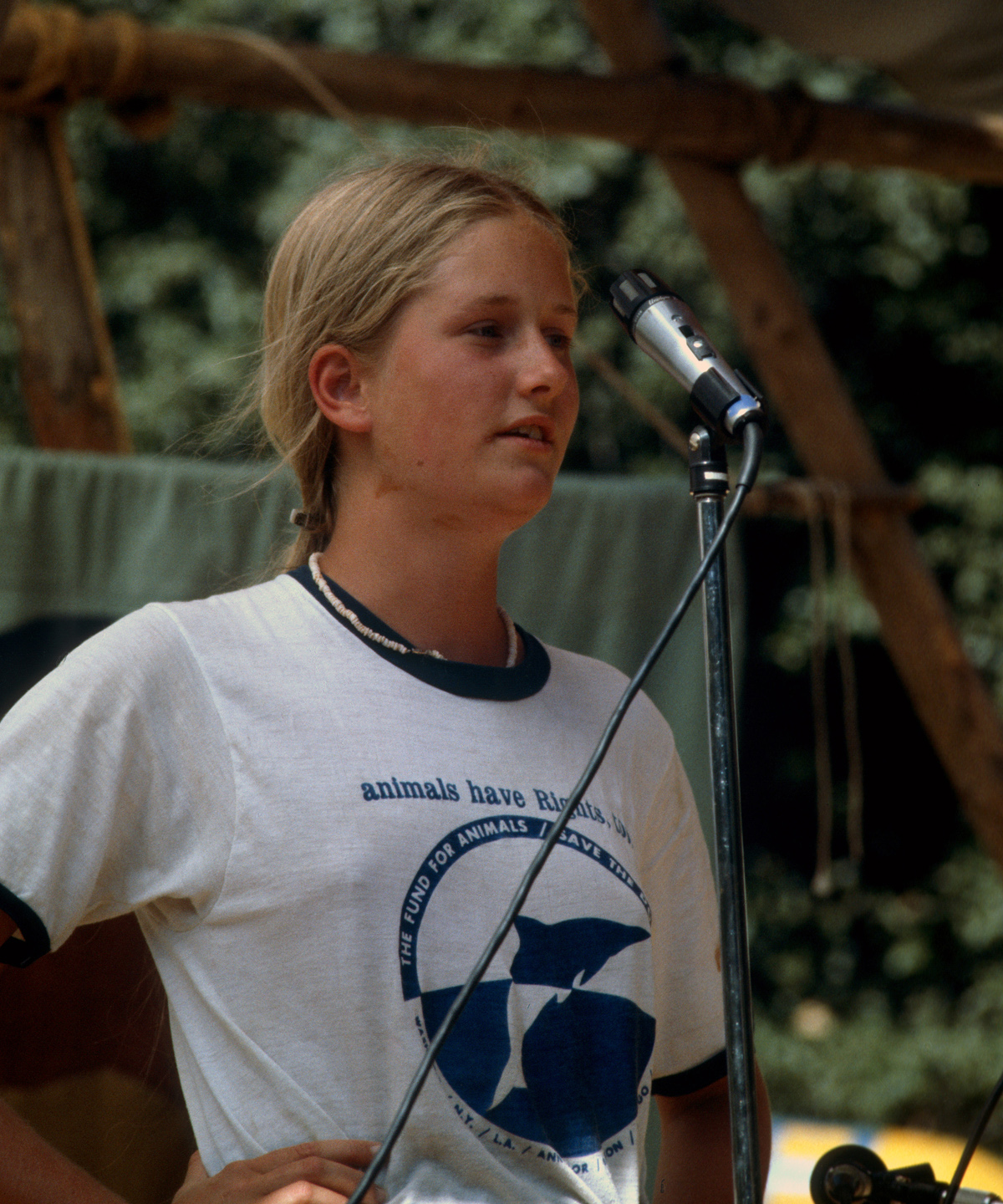
Though I held jobs at three animal-rights nonprofits in the Bay Area, I was not aware of the campaign to save the Stanislaus River from the newly completed New Melones Dam. By chance, I was tending a booth for the Fund for Animals at the annual BAEER Fair for environmental educators where Friends of the River (FOR) also had a booth.
My friend who was helping me was drawn to their urgent message on the flooding of the river. She asked if anyone was going to save the animals that would be trapped on islands or in trees and then be drowned. No one had considered that. She rushed back to our booth to tell me because another one of my jobs was at the Marin Wildlife Center rescuing wild animals. I followed her to the FOR booth where I met Alexander Gaguine for the first time. He was thrilled at the idea of my organizing a wildlife rescue.
And so it began.
I spent the next few weeks attending meetings at FOR to learn about the situation and with wildlife rescue experts I knew. They helped me plan and prepare for the rescue, including forming a program board at the wildlife center and borrowing some rescue equipment. I also made the mistake of telling the Department of Fish and Game about my planned rescue and requesting a permit from them. For weeks they gave me the runaround, requiring me to call long distance many times. A few people I spoke with there told me I was a silly teenager who should focus on school instead. One told me I had been watching too much TV.
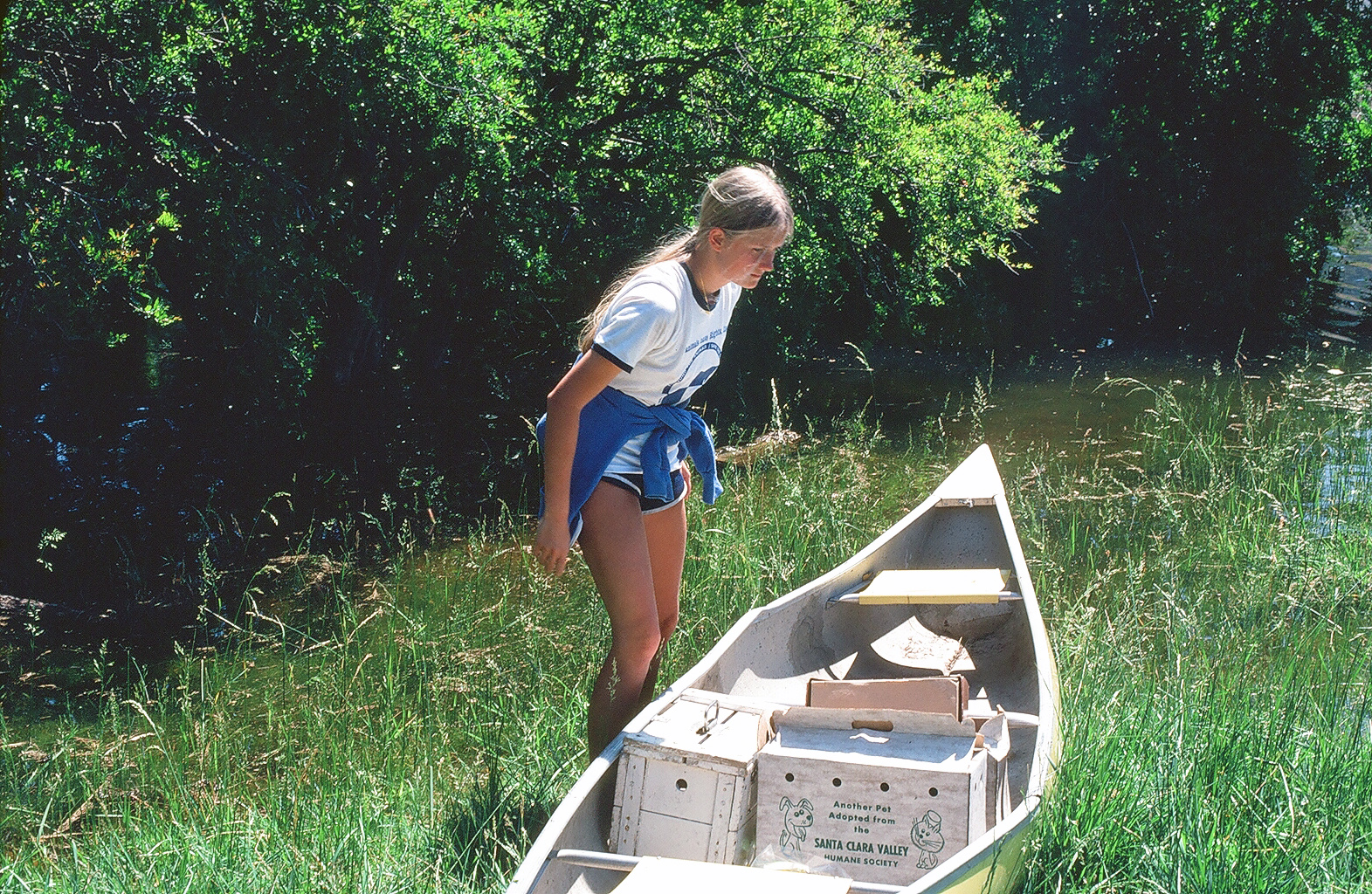
I gave up on the permit and caught a ride with some FOR activists to the river. One of them, Bob McBride, brought along his canoe for me to use for the rescue. We stayed at the ETC land, where I was given a storage area for the canoe and equipment.
The first task was to survey the reservoir behind Old Melones Dam, which stood just upstream from the New Melones Dam. Using topographic maps, I hand drew maps of the reservoir noting all hills that would be turned into islands and then inundated.
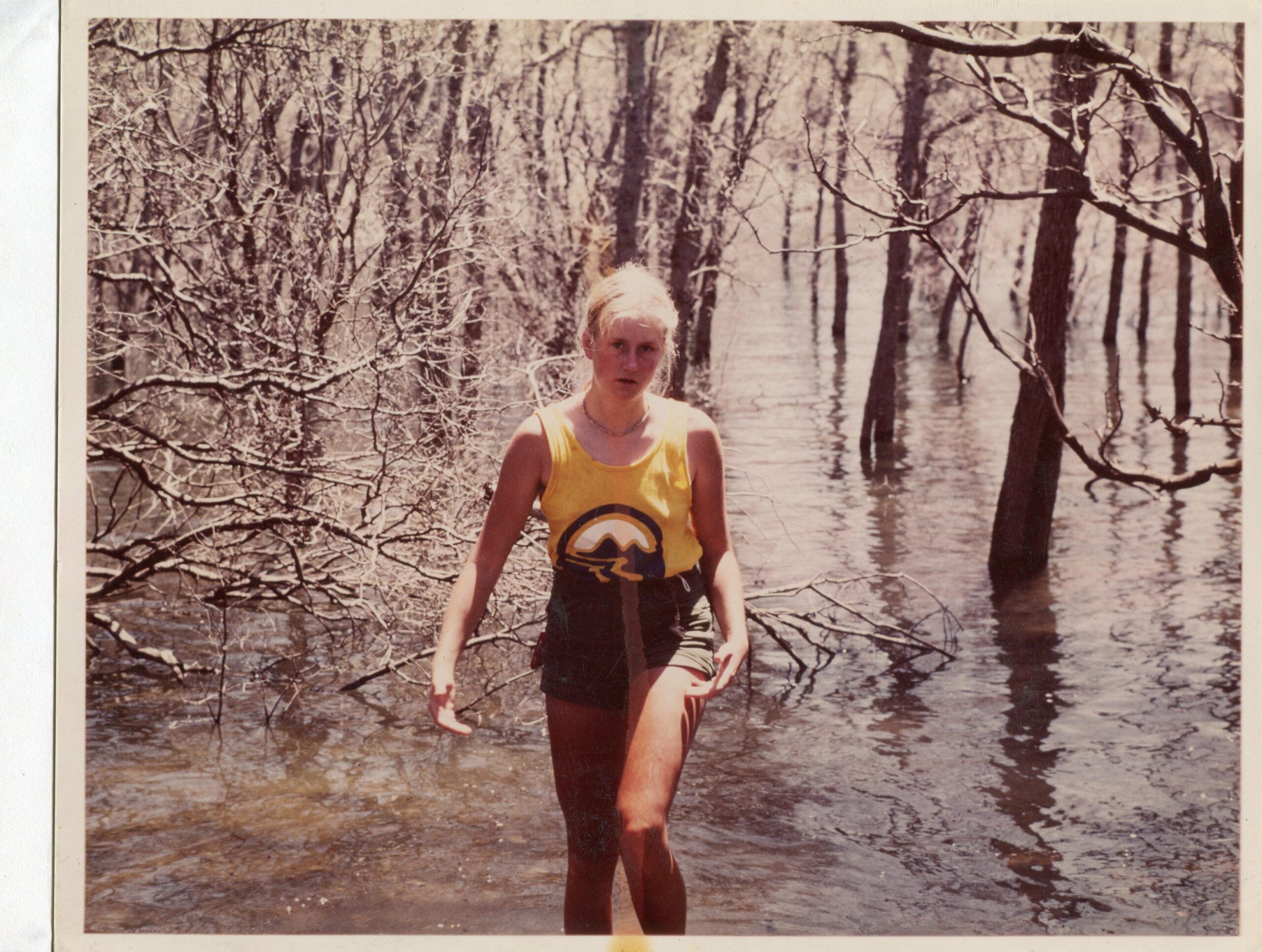
Throughout April and May that year, always with one helper (usually from FOR or ETC), we canoed out to the islands as they were submerged and rescued the small animals that had been trapped as they had gone to high ground. Don Briggs was one of my helpers and took lots of photos. I also took a few reporters out in the canoe.
We quickly learned that the islands had to actually be underwater in order to have the easiest chance of capturing the animals. Otherwise, we would spend too much time, and too much of their remaining energy, chasing them on even the smallest patch of dry ground. This added to the heartbreaking situation, because it meant we had to leave them for even more days without food or shelter, having to climb into the tops of sodden bushes to avoid the rising water. But that allowed us to wade along the submerged surfaces of the islands and easily capture the animals from the bushes, usually grabbing them with our leather gloves. The most common of these animals were rabbits, ground squirrels, mice, lizards, and snakes (usually rattlesnakes).
We also mapped and spent many days canoeing into the tops of the oak trees that were submerged farther upstream as the river course became more of a canyon. There we found many nests with eggs. If they were clearly going to go under, we took them to trees on shore hoping their parents would find them. In those drowning oaks, we found only one sort of animal needing rescue, woodrats, and quite a few of them.
Without exception, as soon as we released the mammals onto shore, they began to eat. Inches from our tipped over cage, not caring if we were a threat or not, they would devour the grass and plants in front of them.
The rattlesnakes were particularly interesting. To capture them, I used a tool called a come-along, which is basically a long pole with a loop at one end that you can tighten from the other end. The one I’d barrowed from the Marin Wildlife Center had a wire loop which was too harsh for the delicate skin of the snakes. So I made one out of plastic pipe and soft, flat line used by rafters (“hoopie”). My helper would hold out the net laundry bag I’d borrowed from my mother and I’d drop them in. The only time they rattled or showed any aggression was if there were already other snakes in the bag. They would each rattle and then smash themselves as far away from each other as possible. When I’d dump the bag on shore, they’d hurry away in different directions.
I often camped at the Witness & Encounter camp at the line between river and reservoir. There I learned more about the decade-long campaign and the widespread love of the river.
At the end of May, after Mark Dubois’ heroic action that stopped the water from rising for that year, my job was over, that is until the next spring when the threat returned. But by that time, we’d already cleared off all the islands, except for one because it was still too high. On that island, in April 1980, we found and rescued only rattlesnakes. That was the end of the wildlife rescue.
Incidentally, at the end of May 1979, after several news stories came out about my wildlife rescue efforts on the Stanislaus, Fish and Game sent me a permit. I threw it away.
Another, surprising opposition I encountered came from a few of the river activists. As environmentalists, they were concerned that by moving animals into other animals’ territories, I was disrupting the natural order of things. Even as a teenager, I had to wonder at the absurdity of those comments in the face of such disruption of the natural order caused by that ridiculous dam.
On June 2, 1979, I joined my first river trip down the Stanislaus River along with dignitaries and FOR activists. I was immediately smitten by the place and finally understood why Mark and others risked their lives to save it.
At the rally that day at Parrott’s Ferry, Alexander invited me to tell the story of the wildlife rescue, which forced me to condense the whole exhilarating experience. I was just one of many speakers that day. As I listened, I was stunned by the depth and inspiration of their particular stories during the campaign.
For the next few years, I devoted much of my time to assisting the campaign to save the upper stretch of the Stanislaus. I also became a river guide. The drowning of the canyon devastated me so much that I left activism for sixteen years until I helped to found a bicycle and pedestrian nonprofit for Prescott, Arizona where I live now. I have since founded an international bicycle nonprofit called One Street that focuses on training local activists on effective programs and campaigns, much of which I learned through the Stanislaus campaign. I have also written several books for activists that note my lessons learned back then, as well as a memoir, Bike Hunt, that reveals how important the fight for the river was to my becoming an activist for activists.
Last March, I returned to that fight on a chance phone call with Mark Dubois.
Mark bemoaned the fact that the story of the campaign to save the Stanislaus has never been told. Short films, lots of news stories, and the excellent Stanislaus River Archive have captured the bits and pieces, but never the story of hope and heartbreak as a whole. As a writer, I offered to consider a book. Mark said no, that the story needed to be told in pictures. From that simple phone call, much like that simple day holding down the Fund for Animals booth at the fair, I have embarked on a new adventure, learning the art of screenwriting. We’ll see where this one leads.
Coda: In 2022, Sue went on to found Restoring the Stanislaus organization. She still has a draft movie script, waiting for stars to align. Learn more about Sue’s Save the Animals campaign.