Prop. 17 – “Burn this letter!”
(an excerpt from Rob Caughlan’s book, A Surfer in the White House)
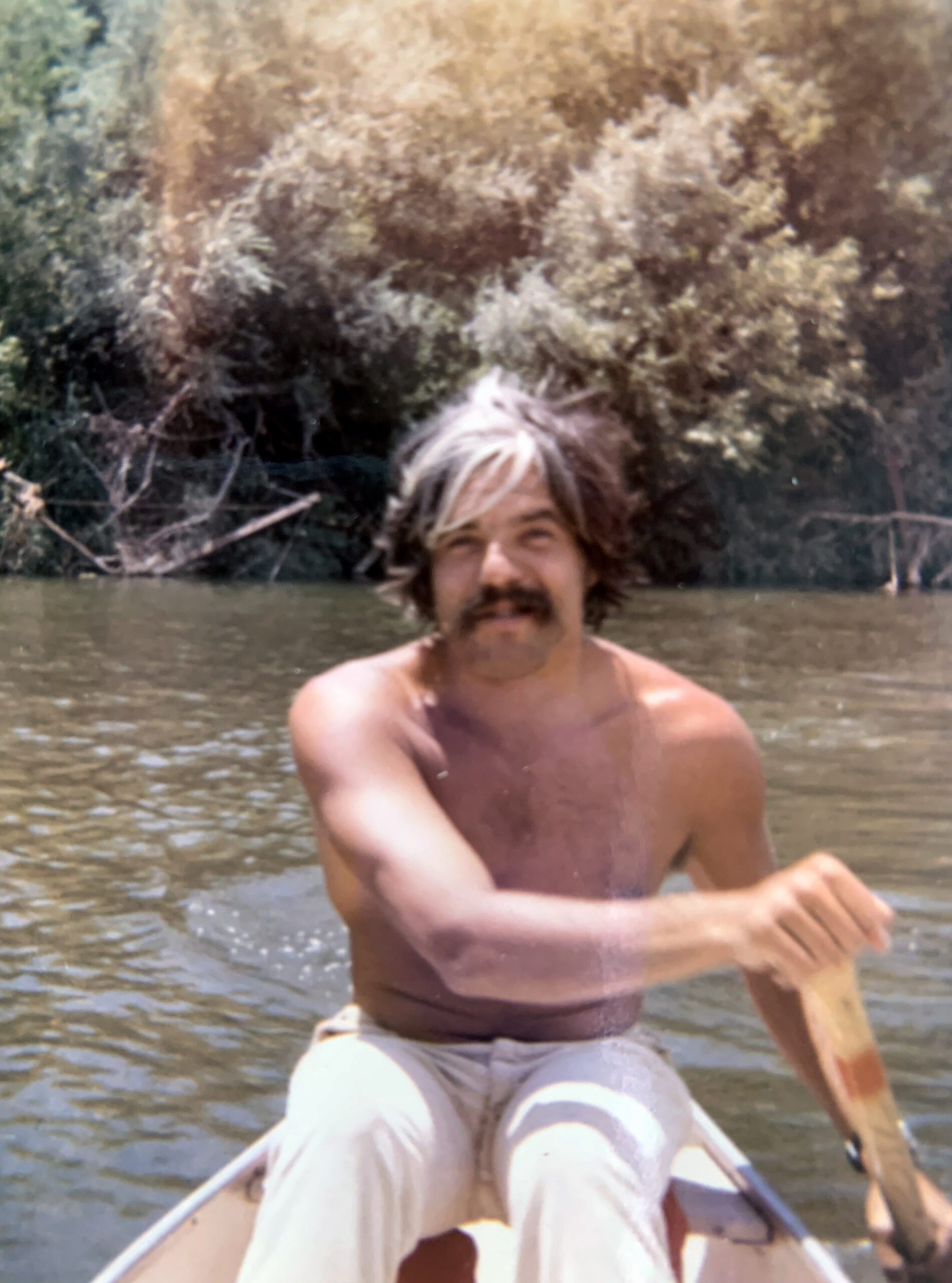
Our next project started with a phone call from Dr. Jerry Meral in 1973. Jerry was the staff scientist at the Environmental Defense Fund. He was also a famous whitewater canoeist. So, it was fitting that Jerry and the EDF wanted to stop the Army Corps of Engineers from building a dam on the Stanislaus River.
The Stanislaus River is a beautiful, 65-mile long waterway that flows from the Sierra Nevada Foothills and into the San Joaquin River in the Eastern part of the Central Valley of Northern California. Congressman John McFall, the powerful House Majority Whip, was angling to spend around $500 million in federal money to build a dam that would flood the most beautiful section. Politicians always use these big projects to show their constituents that they are earning their keep. And it works. It is part of the reason we the people almost always re-elect incumbents.
But this dam wasn’t necessary. Building it would wreck a 17-mile stretch of the river that had some fabulous rapids for rafting, kayaking, fishing and camping, and beautiful cliffs and campsites.
Jerry’s idea was to get an initiative aimed at protecting the river on the next ballot. We agreed, so my partner, David Oake, Jerry and I started an organization to help raise money and defend it. We called it Friends of the River (FOR).
At that time, in order to earn a spot on the California ballot, one needed to gather a half million legal signatures. Today, most initiative campaigns obtain signatures by hiring companies that pay people for each valid signature. Though we got some of our signatures that way, we obtained the vast majority through volunteers. We employed our “lots of folks doing a little” approach again. To make it easier for volunteers to gather signatures, we created a new petition format. Most ballot petitions have spaces for 10 or 30 names and addresses. Instead, we only had ten signature spaces. Our whole pitch was “just get four plus your own.” Having achievable goals is crucial to motivating volunteers.
The Stanislaus River campaign became the largest grassroots campaign in California history. We got the issue on the November 1974 ballot and it was called Proposition 17. Thirty thousand volunteers helped. I don’t think that number has ever been surpassed.
We sent the letter to various lists of people interested in environmental causes, and got an amazing response. Usually, a 2-3% return on a fundraising letter is considered very successful, but we were getting 14-l5%! In all the years we were in business, we never came close to achieving anything like that again. Something about that letter just clicked with people.
One afternoon while we were still deep in the Proposition 17 campaign, a young river lover named Doug Allen came into our campaign headquarters. He was about six feet tall, wore small rimless glasses, and spoke with a soft southern drawl. He said he had worked in the Department of Natural Resources for Governor Jimmy Carter.
Allen told us that Carter had also been approached by the Army Corps of Engineers. They had proposed building a large dam project on the Chattahoochee River, another of our country’s beautiful blue veins. From its source high in the Blue Ridge Mountains, the Chattahoochee runs south for 430 miles, ultimately serving as the border between Georgia and Alabama.
The dam had been a contentious issue. Originally, Carter had been for it, but when he learned that the Army Corps had exaggerated the benefits and minimized the costs, he changed his mind. I think it offended his military sensibilities. Carter was Navy, and he just didn’t think that military people were supposed to lie to one another other.
That gave me an idea. I knew a little something about Carter because I had read a story about him in Readers Digest. I thought we could get some good press for our cause if we could get Carter to come to California to speak as a celebrity guest at a Friends of the River fundraiser. Doug agreed to help. He put in a couple of calls to his friends in the Governor’s office, and we arranged a big Hollywood event at the home of television star Loren Greene.
Carter came to the event and really uncorked on the Army Corps that night. I was impressed! I had never heard any politician be so critical of the Army Corps. In Washington, the sacred cow is really the sacred pork.
Carter’s speech gave us a great boost, but I couldn’t ignore all the money the pro-dam-forces were spending. I was concerned that we were getting overwhelmed. When I told Carter that I was worried, he said, “It doesn’t matter if you win. Rivers are important. Fighting boondoggle dams is important. You have to keep on trying.” (Read about Pres. Carter’s July 1974 endorsement of saving the Stanislaus River.)
It had become a rough campaign. I had a good friend who is an ace detective. One day, he called me at the office and told me to call him back from wherever we had lunch. Then he hung up. When I called him back from a restaurant, he said, “A friend of mine in ‘the industry’ was telling me about his new project. You’re it.”
That’s how we found out that our phones were being tapped.
It makes you feel violated to know that someone is listening to your calls. But we knew what to do. We tried to use the knowledge that they were listening to give our opponents bad information. For example, I bragged to some friends about having a spy in their campaign. We actually caught a reporter for the Modesto Bee writing press statements for the dam builders.
One night, I got a threatening phone call at home. It was a simple little call late at night. A gruff voice just said, “Hey, Caughlan, we’re going to break your fucking legs.” Click.
The sinister film Chinatown, about California’s water wars, had just hit the screens about that time, so when I got that phone call, all I could think about was Roman Polanski putting his knife in Jack Nicholson’s nose. Needless to say, I began to have trouble sleeping. One night, around 2 AM, I saw a car’s headlights go slowly across my ceiling. I sat bolt upright in bed and watched a sedan with a couple of people go by. A few minutes later, the lights came from the other direction. Then the car pulled up in front of our house, turned off the lights and stopped. Now I was wide-awake!
My first thought was to put on my pants. As I was doing so, I could see two people in the car. I thought about weapons. I decided I would get the fire poker and wait behind whatever window or door they went to. I was just about to wake my wife, Diana, and tell her to call the police when the car door opened. A young woman hopped out, ran back up the street and left something on the porch of the house up the street where a neighbor boy lived. She climbed back in the car and they drove away, leaving me standing there in the dark with a pounding heart. Of all the nights for her to do that!
We fought with all we had. We had a dedicated team of hundreds of river lovers who invaded the Los Angeles area in the last couple of months of the campaign, doing door-to-door leafleting and more. They came from the Sierra Foothills and walked the wild precincts of Orange County. We produced some great radio ads with Paul Newman and Charlton Heston, but we just didn’t have the money to play them as much as we needed.
Meanwhile, the pro-dam-building guys were outspending us. They bought billboards all over the state and put up pictures of dead fish with the slogan, “Save Money: Vote No on Higher Taxes, Vote No on Proposition 17.” Our campaign had nothing to do with taxes, but that didn’t stop the dam builders from trying to trick the voters.
Next, they ran TV ads that blared, “Stop the Wild River Hoax.” (They said our effort was a hoax because there were already some smaller dams on the Stanislaus River.) They outgunned us with money and billboards and hundreds of thousands of dollars worth of deceptive TV ads.
Voters should get some credit, however. Forty-seven percent of them saw through the deceptions and voted to save the river. But, in the end, we lost. (Read about the post-election poll showing voters had actually wanted to save the Stanislaus River.)
Losing the Stanislaus River campaign was devastating. I had never suffered a political defeat before. All my other campaigns had been winners. In the aftermath, it became easier to see why people don’t like to get involved. Losing an important battle hurts! Other than when Jon Shaffer (my best surfing friend and the best man at our wedding) got killed in Vietnam, I have never felt worse. The sirens’ song about forgetting everything else and just going surfing sounded sweet indeed. I wanted to quit right then and there, but I didn’t. Perhaps because of Carter’s advice.
A few years later, John McFall, the congressman who led the effort to build the dam, was convicted of a seedy little crime. He had been taking illegal gifts from some Korean lobbyists. He was disgraced. and it stained his legacy. But the stain he left on California, killing that great stretch of white water, was much worse. (Read about the FOR campaign to unseat Rep. McFall.)
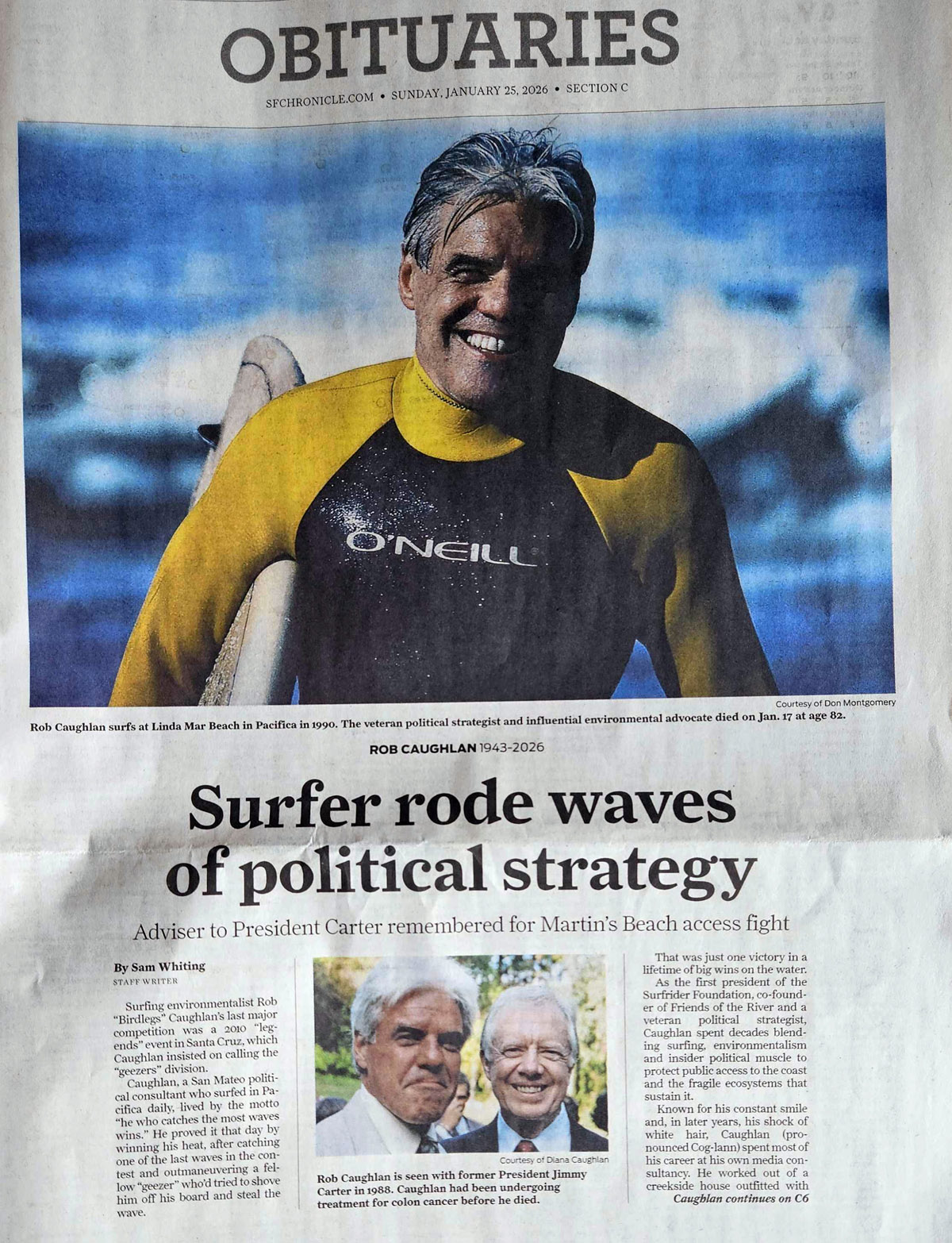
Learn more about Rob, who passed away in early 2026.