The Fig Tree lives
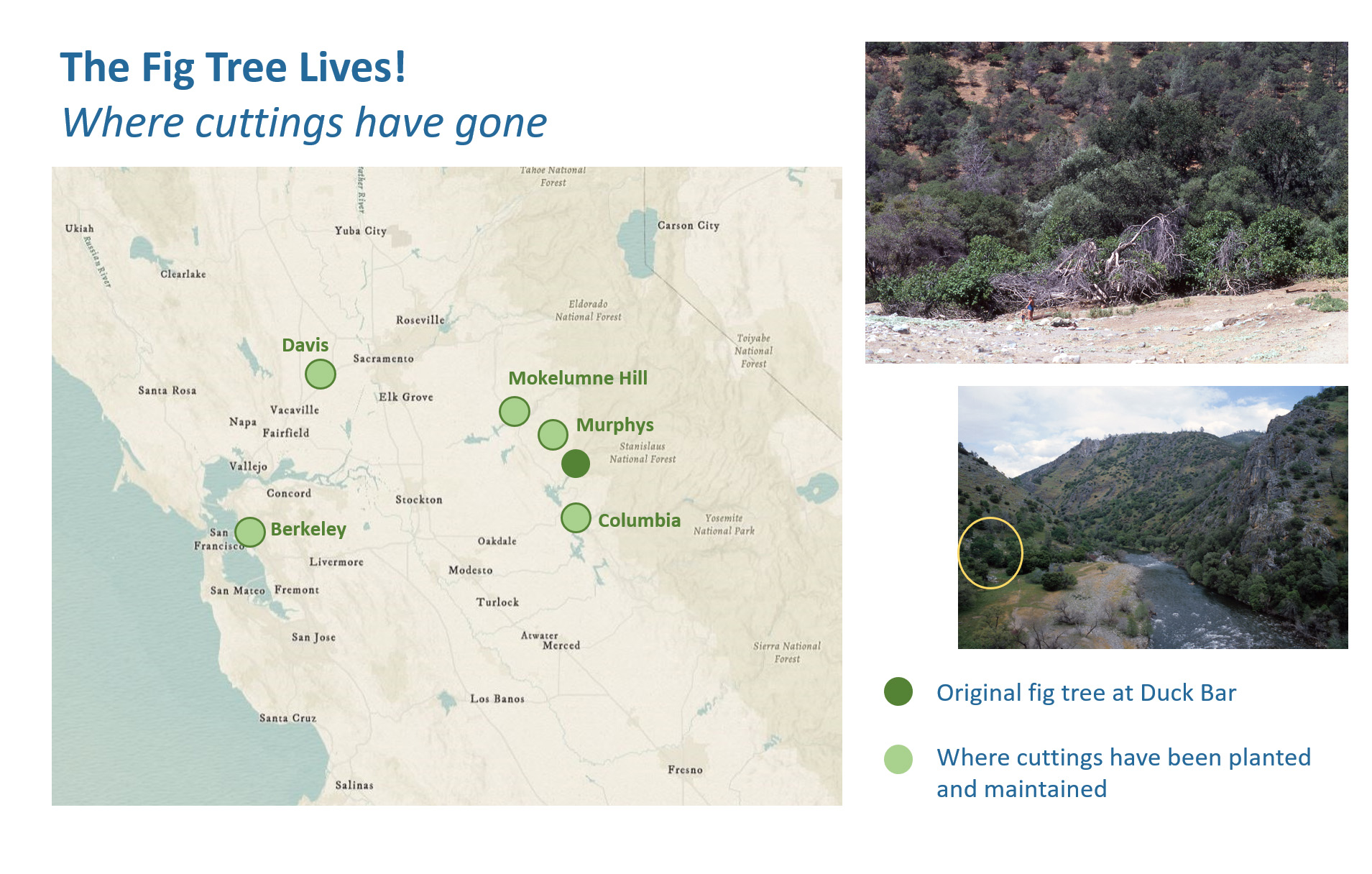
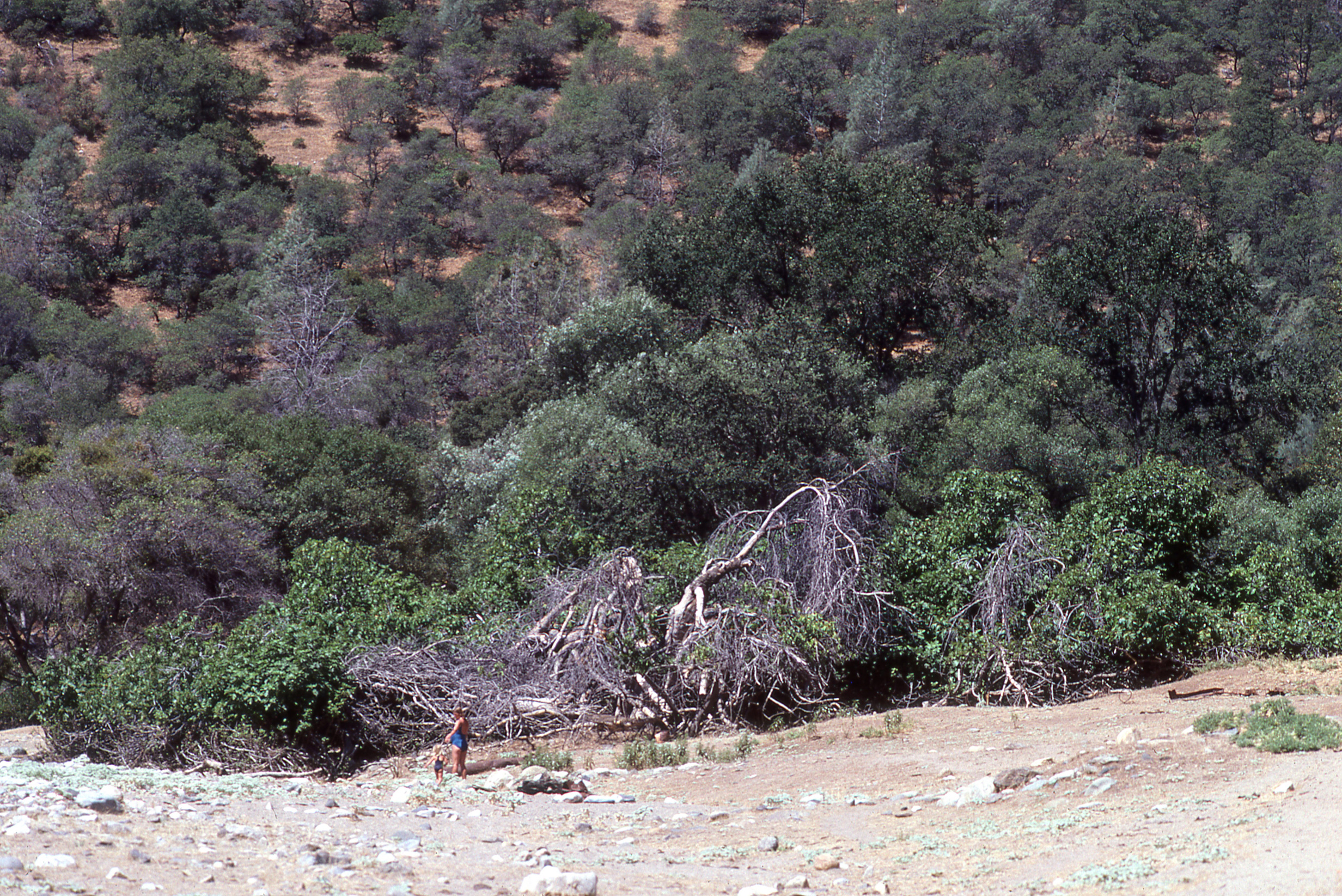
One unbearably hot afternoon at my dad’s mining claim on the Stanislaus when I was 12, when the sun hit the rock face across the river and the heat radiated into the still air, I was sent by my mom from the kitchen tent into the deep shade of the huge old fig tree at Duck Bar to pick some fruit for dessert.
I could hear the river making soft sounds around the cobbles of the bar, much calmer than the sound of the rapids upstream where the canyon narrowed.
I could also hear something closer: a rhythmic, breathy cadence, something I couldn’t identify until I saw the source: a limp, overheated mountain lion, looking a lot like a pair of dingy long johns, had draped itself over one of the large horizontal branches. The sound was its panting in an attempt to cool itself.
Those gold eyes barely opened and then closed again. There are times when it is just too hot to bother with anything for any reason. I backed out quietly with my shirttail full of figs.
No one knows when or how it came to grow in the cobbles on the flood plain near a wide stretch of the Stanislaus River called Duck Bar, but it was old and huge by the 1960s.
Clues to its beginning were in the evidence of placer mining activity in the canyon: three-foot high parallel stone walls filled with overburden snaking through the wooded areas, stones stacked against steep rock faces, discarded shovels worn down to the handle socket, and abandoned cooking pots.
The tree could have come in with a miner as a twig, fruit, or discarded seed during the second half of the 19th century (some think it was first planted by Chinese workers during the years after the Gold Rush), or even earlier as a contribution from a bird, but by the time Bill Armstrong was mining there, the Duck Bar fig tree had the largest circumference of branches of any fig tree in the United States.
One version of its origin states that an early inhabitant of the Duck Bar area, Miwok Chief Indian Walker, thrust his walking staff into the sand and it rooted there.
Vera Armstrong, my mother, appreciating the large, sweet, dark purple fruit and knowing the tree would be drowned by the new Melones Dam, took cuttings from it and carried them up the steep bulldozer-cut track out of the canyon to her car parked on Camp Nine Road. She propagated the cuttings in Walnut Creek and distributed them in the hope the variety would not die out and one day be returned to its river at another location. One of the “daughters” of the Duck bar Fig is happily growing in front of the Brice Station tasting room in Murphys, near the Stanislaus River, and others have been planted in other locations (see map above).
See more about the Old Fig Tree.